Bhutanatha Temple Group
Sandstone shrines mirrored in Agastya's waters
📷 Itsmalay · CC BY-SA 4.0 · Wikimedia Commons
The story
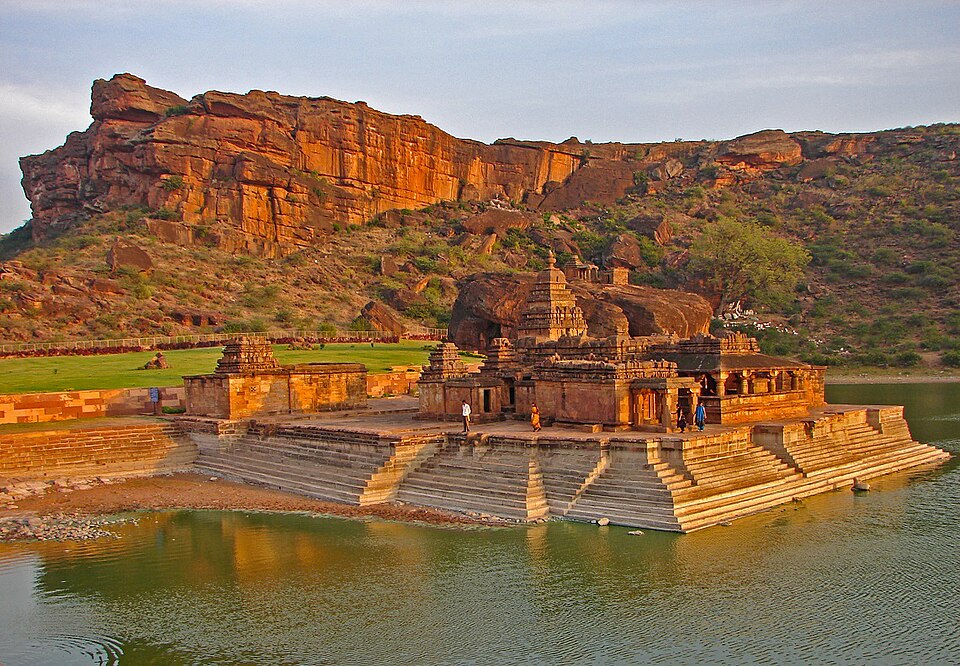
Walk with me to the eastern shore of Agastya Lake. See that temple standing right at the water's edge, its sandstone glowing golden in the evening light? This is Bhutanatha, a name of Shiva as the lord of all beings and spirits. Chalukya builders raised the main temple around the year 700 and crowned its sanctum with a three storeyed tower in the southern Dravida style. Step inside the hall and notice the four massive pillars, and the stone lattice windows that let in soft light. At the foot of the sanctum door, look for the river goddesses, Ganga riding a makara and Yamuna on a tortoise. Stone steps, built for pilgrims, lead straight down into the water. Nearby, carved into the rock, Vishnu reclines on his serpent with his ten avatars above him. Stay for sunset, when the temple seems to float on its own reflection.
Crowd forecast
Best time to visit: 6 AM
Estimated from day, hour, season, holidays & festivals, blended with live visitor reports.
How crowded is it right now?
Rate 1 to 10 — 1 is almost empty, 10 is packed.
Plan your visit
Timings
6:00 AM – 7:00 PM (approx.)
Entry
Free (approx.)
Typical visit
45 min
Best time
October to February; late afternoon to sunset for golden light and reflections on the lake
Accessibility
Partly accessible · ~20 steps (approx.)
Walkable from the cave temple area. The approach is mostly level but has uneven stone paving, and there are steps into the temple and down to the lakeside ghat. Little shade at midday. No dedicated facilities at the temple itself; use those near the cave complex or in town.
Key facts
- The Bhutanatha temples stand on the east bank of Agastya Lake in Badami, Bagalkote district.
- The complex has two subgroups: the East or main Bhutanatha group (about 700–725 CE, mostly Dravida style) and the North or Mallikarjuna group (11th–12th century, mostly Nagara style).
- The main temple is a Shiva temple with a Shiva linga in a square sanctum; the name Bhutanatha, 'lord of beings or spirits', is an epithet of Shiva.
- The sanctum of the main temple is crowned by a three-storey (tritala) Dravida-style superstructure.
- Its closed hall (gudha-mandapa) has four massive central pillars and perforated stone jali windows.
- Images of the river goddesses Ganga on a makara and Yamuna on a tortoise flank the foot of the sanctum doorway.
- An inscription on the outer wall, dated to about the late 9th century, records a gift to the deity, showing the temple was in active use then.
- The Mallikarjuna group temples have stepped pyramidal (phamsana) roofs and reflect the work of Kalyani (Later) Chalukya architects.
- Nearby rock-cut shrines include a 7th-century relief of the reclining Vishnu (Anantashayana) with the ten avatars carved above.
- A small nearby cave holds a seated figure whose identity is debated by scholars, with theories ranging from the Buddha to Vishnu or a king.
- The group is managed by the Archaeological Survey of India as part of the Group of Monuments, Badami.
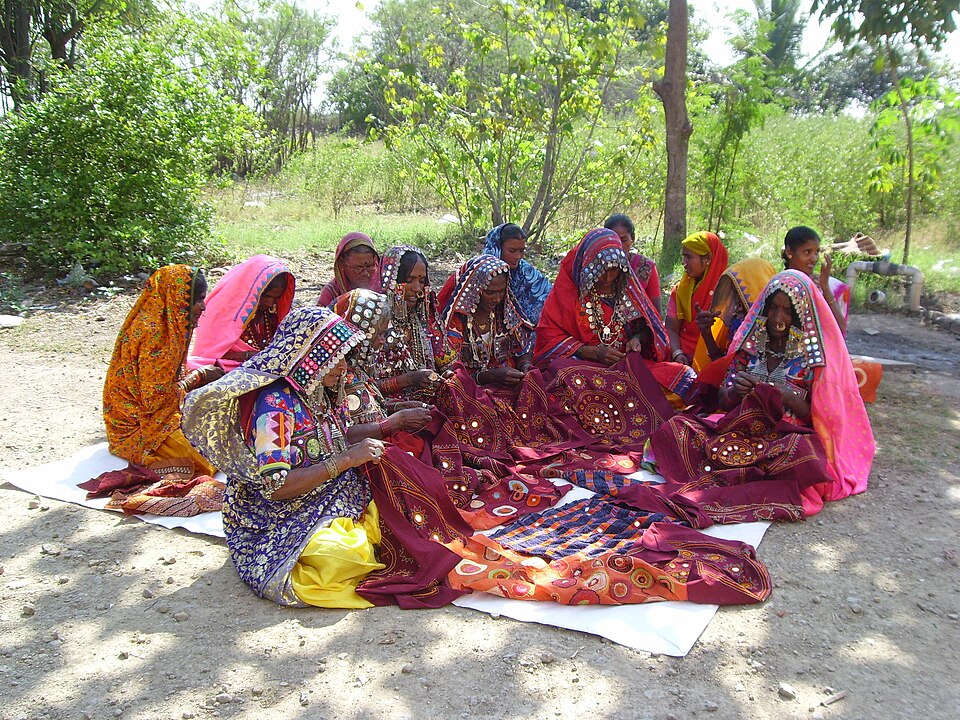
Artisans nearby
Hidden gems nearby
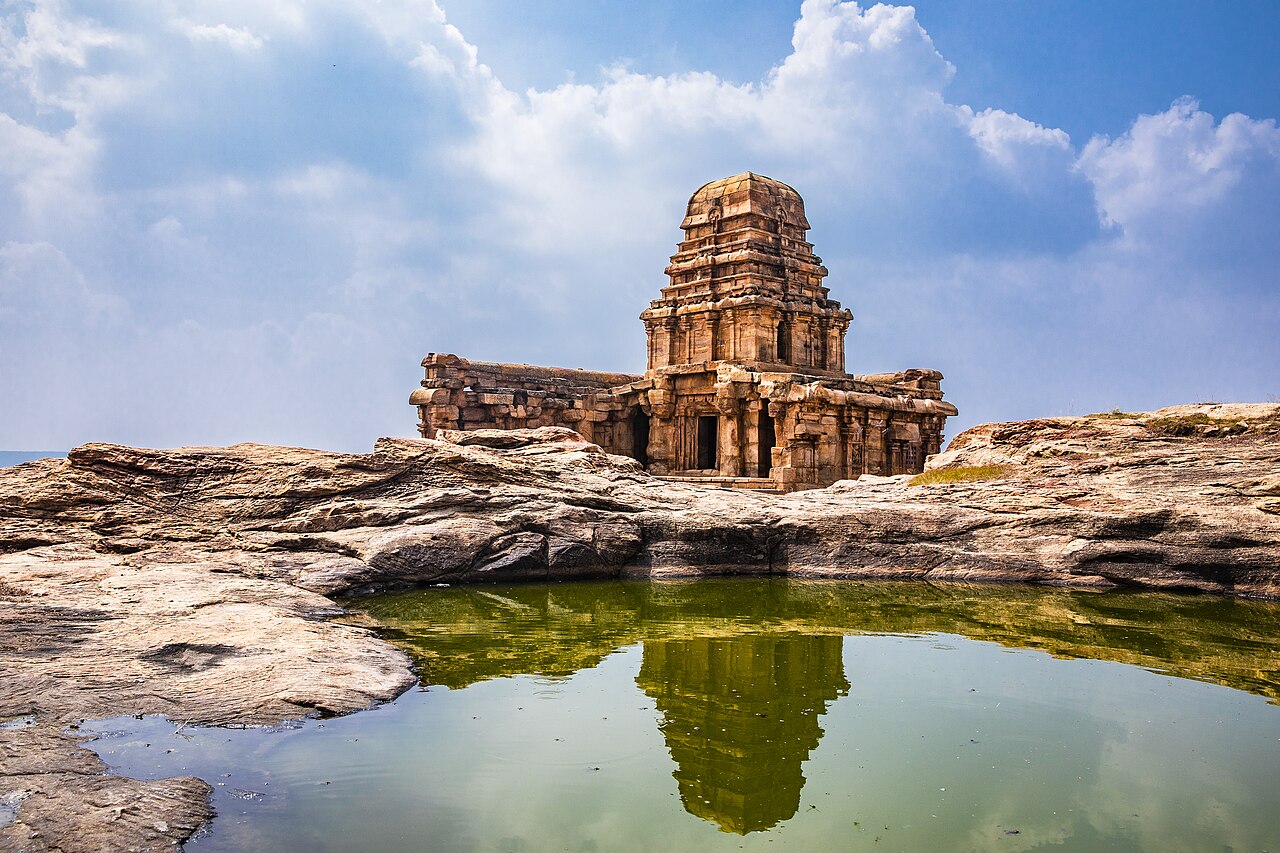
Badami North Fort and Shivalayas
Ancient temples crowning Badami's rocky citadel
Calm· 4%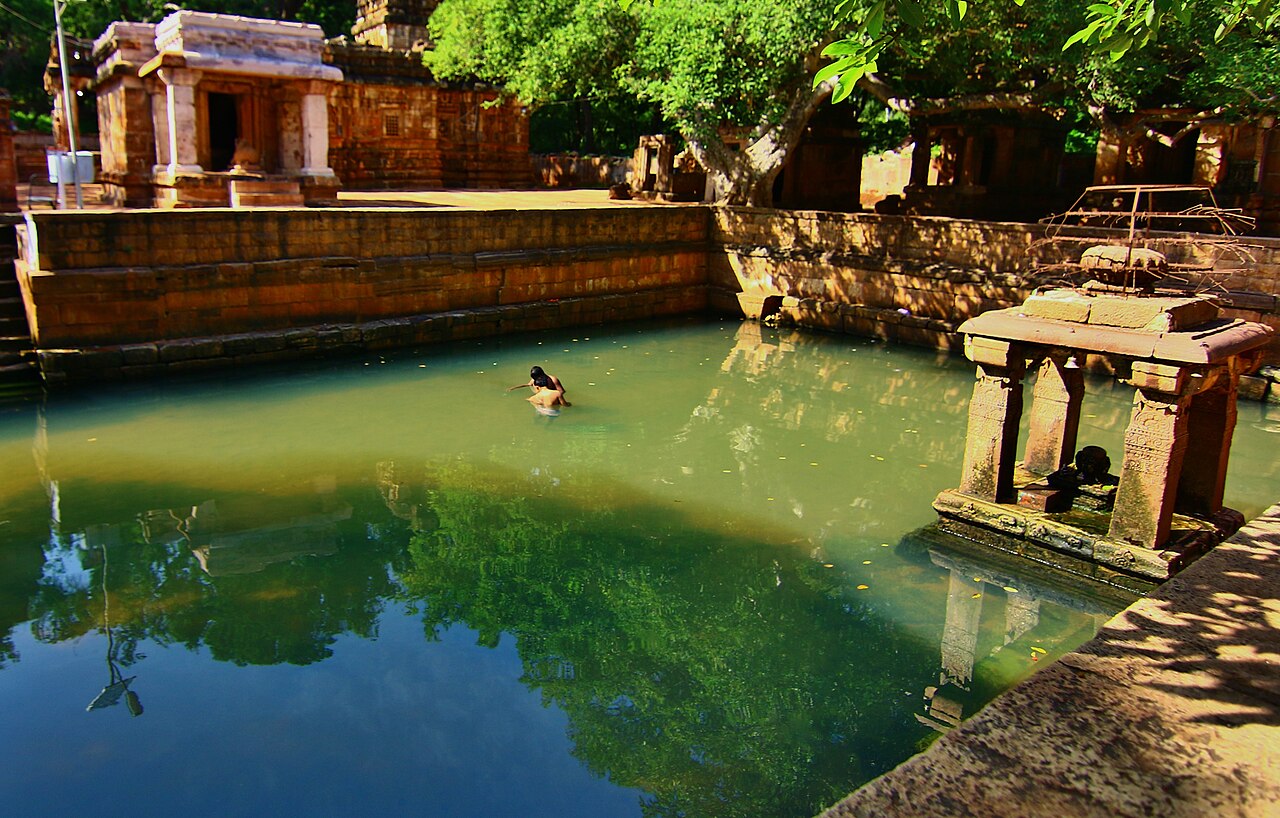
Mahakuta Group of Temples
Chalukya shrines around a living spring-fed tank
Calm· 3%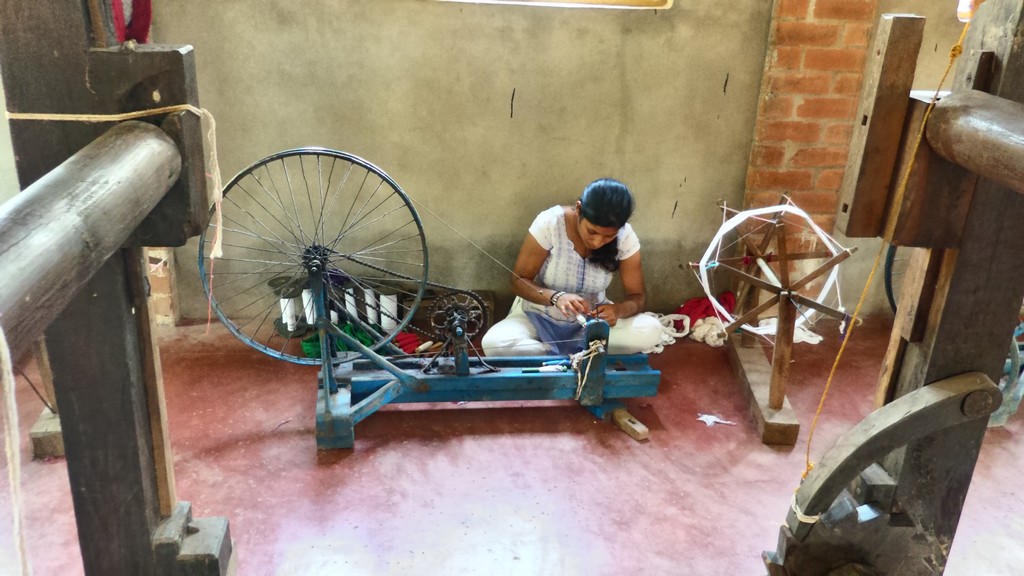
Guledgudda Khana Weavers
Home of the shimmering khana blouse fabric
Calm· 2%
Siddhanakolla
A hidden rocky valley of springs and saints
Calm· 2%Sources (5)
- https://en.wikipedia.org/wiki/Bhutanatha_group_of_temples
- https://en.wikipedia.org/wiki/Badami_cave_temples
- https://www.incredibleindia.gov.in/en/karnataka/badami/bhutanatha-temple
- https://karnatakatourism.org/en/destinations/badami
- https://www.openstreetmap.org/search?query=Bhutanatha%20Temple%20Badami