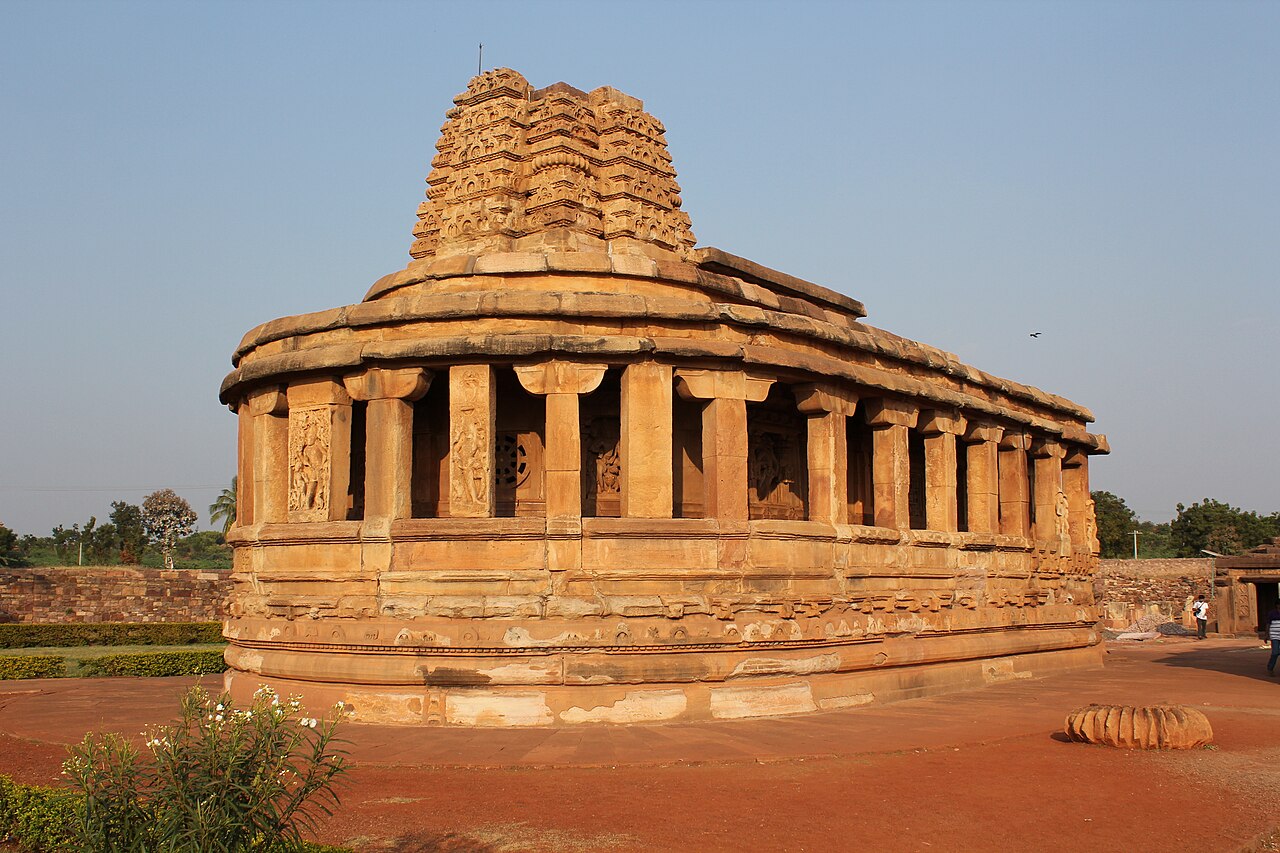
Aihole Temple Complex
Cradle of Indian temple architecture
📷 Arian Zwegers from Brussels, Belgium · CC BY 2.0 · Wikimedia Commons
The story
Welcome to Aihole, a quiet village that was once a great workshop in stone. Historians often call it a cradle of Indian temple architecture, because builders here tried out so many temple forms. Start with the Durga temple. See its rounded back, shaped like a horseshoe, and the pillared walkway that runs all around it on a high platform. Its name comes not from the goddess, but from a durg, a lookout fort that stood on or near it much later. Close by, the Lad Khan temple has a sloping stone roof that copies older wooden buildings, and it takes its name from a man who once lived inside it. Walk uphill to the Ravanaphadi cave, where Shiva dances among the seven mother goddesses. Finally, climb Meguti hill. On the Jain temple's wall, a Sanskrit poem by Ravikirti, inscribed in 634, praises King Pulakeshin the Second.
Crowd forecast
Best time to visit: 6 AM, 7 AM
Estimated from day, hour, season, holidays & festivals, blended with live visitor reports.
How crowded is it right now?
Rate 1 to 10 — 1 is almost empty, 10 is packed.
Plan your visit
Timings
Durga temple complex 6:00 AM – 6:00 PM (approx.); ASI museum 9:00 AM – 5:00 PM, usually closed on Fridays (approx.)
Entry
₹25 for Indian citizens and SAARC/BIMSTEC visitors, ₹300 for foreign nationals at the Durga temple complex, children under 15 free (approx. ASI rates); many other temples in the village can be viewed free
Typical visit
180 min
Best time
October to March; morning, when it is cooler for walking between the scattered temple clusters
Accessibility
Partly accessible · ~40 steps (approx.)
The main Durga temple complex is fairly flat with lawns and paths, but the temples stand on high plinths with steep steps. Other temples are scattered through village lanes. Ravanaphadi cave and Meguti hill need an uphill walk and more steps. Facilities and shade are limited, so carry water and sun protection.
Key facts
- Aihole, known in inscriptions as Ayyavole and Aryapura, has over 120 stone and cave temples spread along the Malaprabha river valley, mostly dating from the 6th to 12th centuries CE.
- Over 100 of Aihole's temples are Hindu, a few are Jain and one is Buddhist; with Badami, the site is described as a cradle of experimentation in temple architecture, yielding prototypes of 16 types of free-standing temples and 4 types of rock-cut shrines.
- The Durga temple (late 7th to early 8th century) has an apsidal (rounded-end) plan, a high moulded plinth and a pillared ambulatory running around the sanctum.
- The Durga temple is not named after the goddess Durga; the name comes from a later 'durg' (fort or lookout) associated with it, and scholars believe it was originally dedicated to Surya or Vishnu.
- The Durga temple's reliefs include Durga as Mahishasuramardini, Narasimha, Varaha, and Shiva with his bull Nandi; the fallen amalaka crown of its tower lies on the ground nearby.
- The Lad Khan temple is among the oldest temples at Aihole, though its date is debated (estimates range from about the 5th to the 7th or 8th century); its sloping roof imitates timber construction and it has stone lattice windows.
- The Lad Khan temple is named after Lad Khan, a man said to have lived in or used the temple long after it was built.
- Ravanaphadi is a 6th-century rock-cut Shiva cave temple less than a kilometre uphill, north-east of the Durga temple, with reliefs of dancing Shiva with the Saptamatrikas, Ardhanarishvara and Harihara.
- The Meguti Jain temple on Meguti hill, dedicated to the Tirthankara Mahavira, was built in 634 CE and was never fully completed.
- The Aihole inscription (Aihole Prashasti) on the east wall of the Meguti temple is a 19-line Sanskrit poem in old Kannada script by the Jain poet Ravikirti, dated Shaka 556 (634–635 CE), praising Pulakeshin II.
- The inscription names the poets Kalidasa and Bharavi, and describes Pulakeshin II's victory over King Harshavardhana.
- Aihole was a hub of the 'Ayyavole 500' guild of merchants and artisans; an ASI museum beside the Durga temple displays sculptures found at the site.
Artisans nearby
Hidden gems nearby
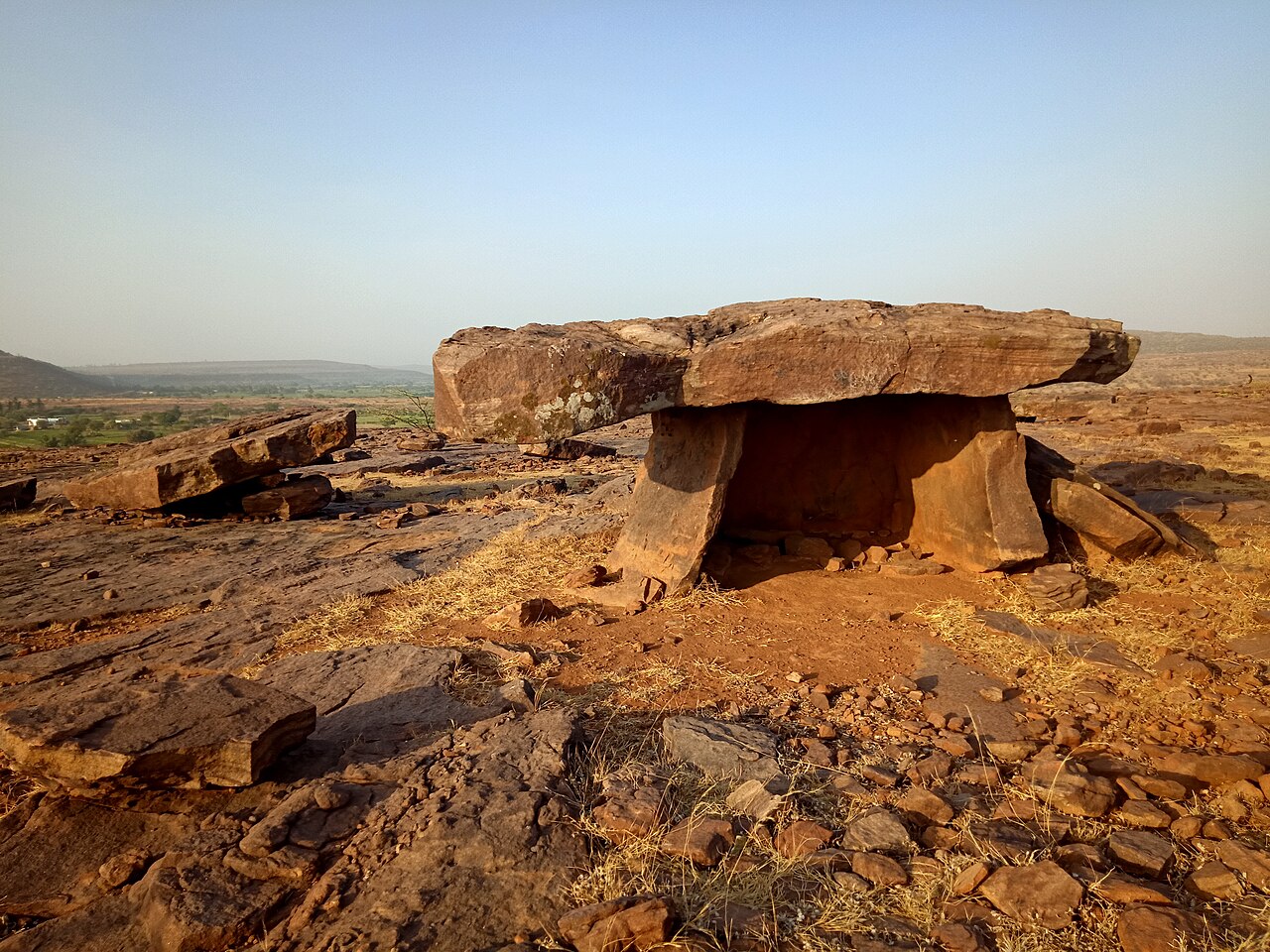
Siddhanakolla
A hidden rocky valley of springs and saints
Calm· 2%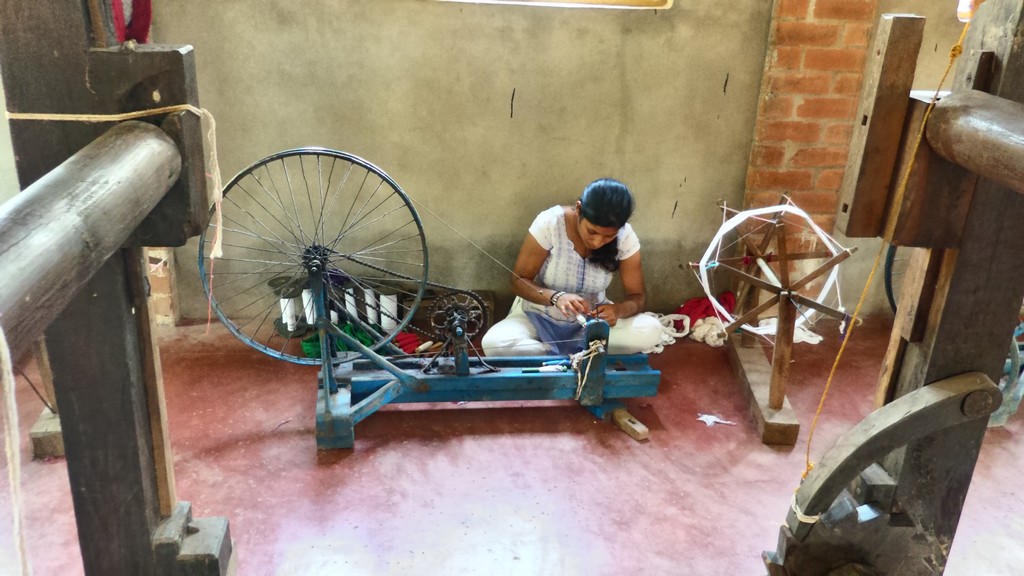
Guledgudda Khana Weavers
Home of the shimmering khana blouse fabric
Calm· 2%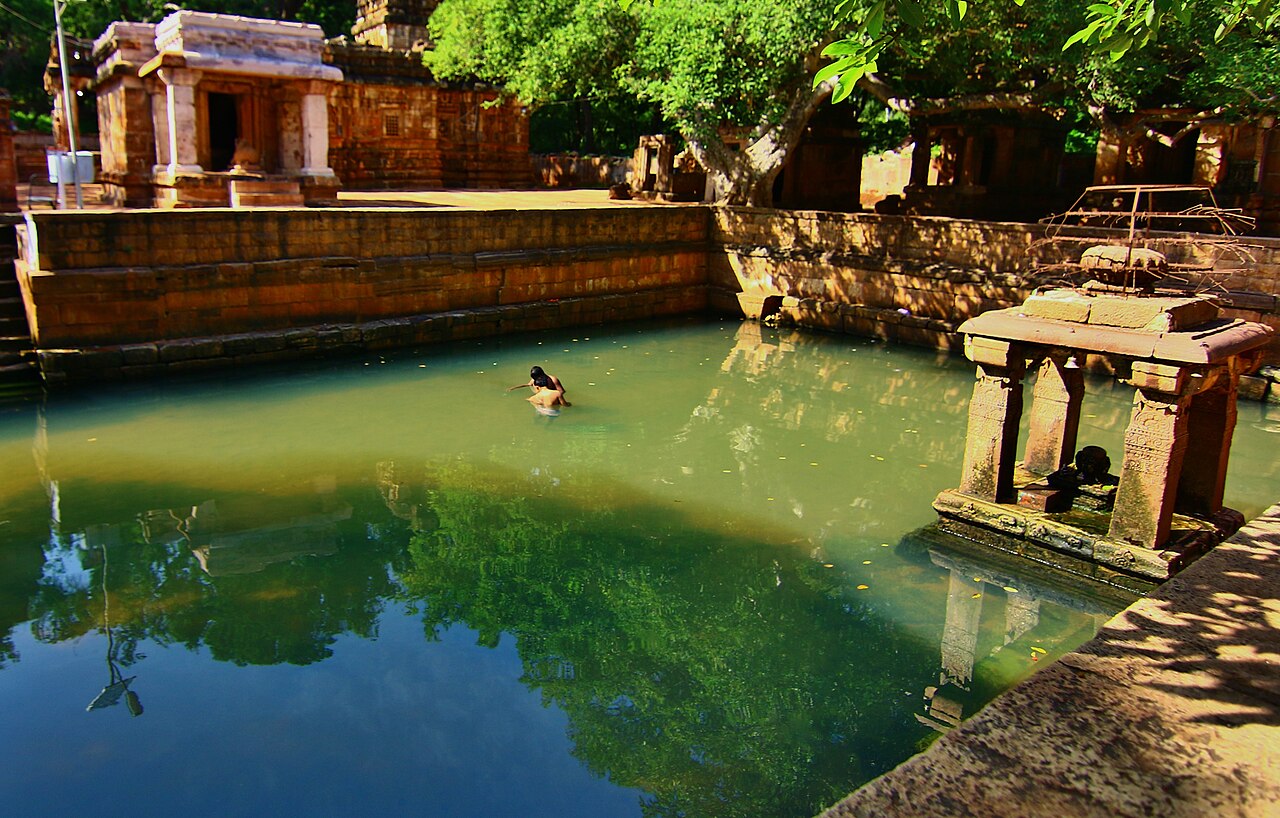
Mahakuta Group of Temples
Chalukya shrines around a living spring-fed tank
Calm· 3%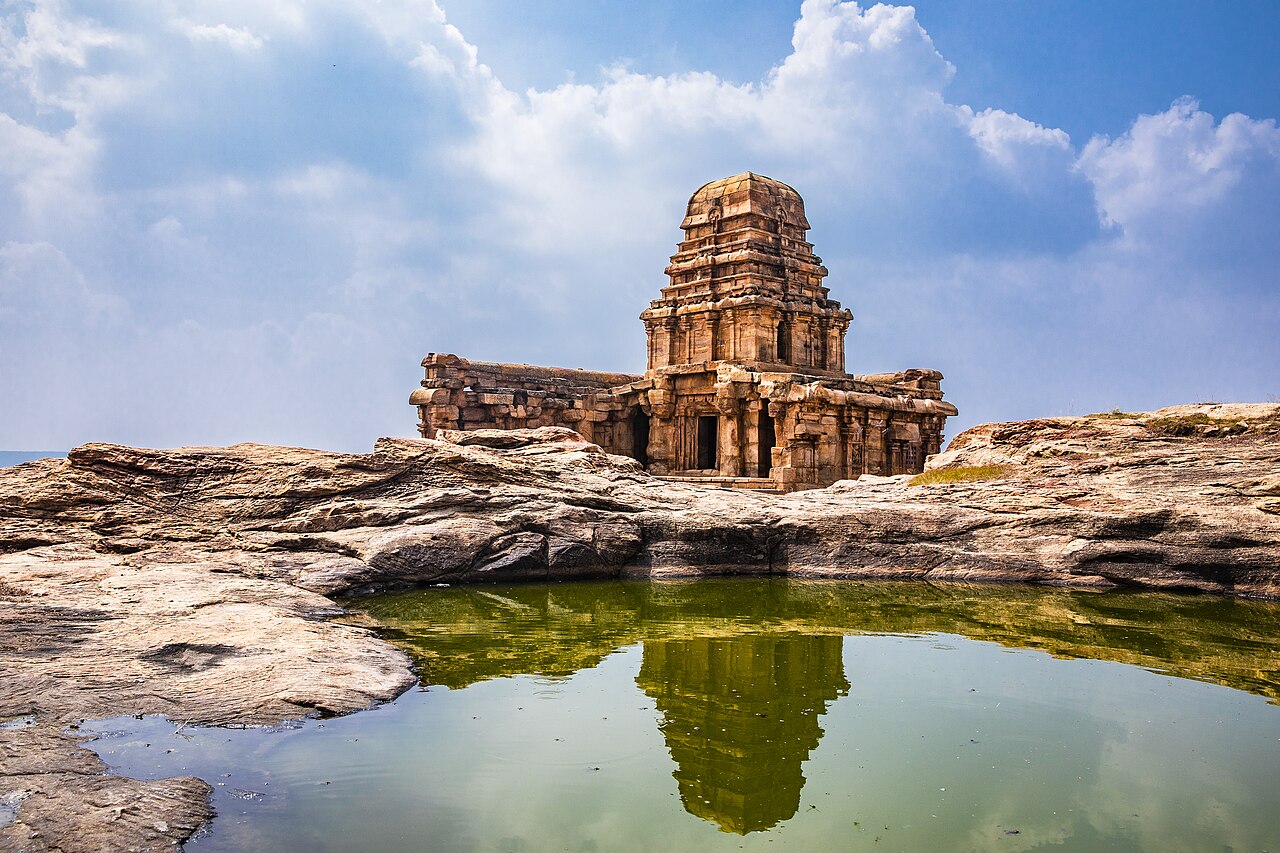
Badami North Fort and Shivalayas
Ancient temples crowning Badami's rocky citadel
Calm· 4%Sources (8)
- https://en.wikipedia.org/wiki/Aihole
- https://en.wikipedia.org/wiki/Durga_temple,_Aihole
- https://en.wikipedia.org/wiki/Lad_Khan_Temple
- https://en.wikipedia.org/wiki/Meguti_Jain_temple
- https://en.wikipedia.org/wiki/Aihole_inscription
- https://karnatakatourism.org/en/destinations/aihole
- https://whc.unesco.org/en/tentativelists/5972/
- https://www.waytoindia.com/travel-guide/karnataka/badami-aihole-pattadakal